 FYRHost
Offshore VPS hosting — no KYC, Iceland and Switzerland included
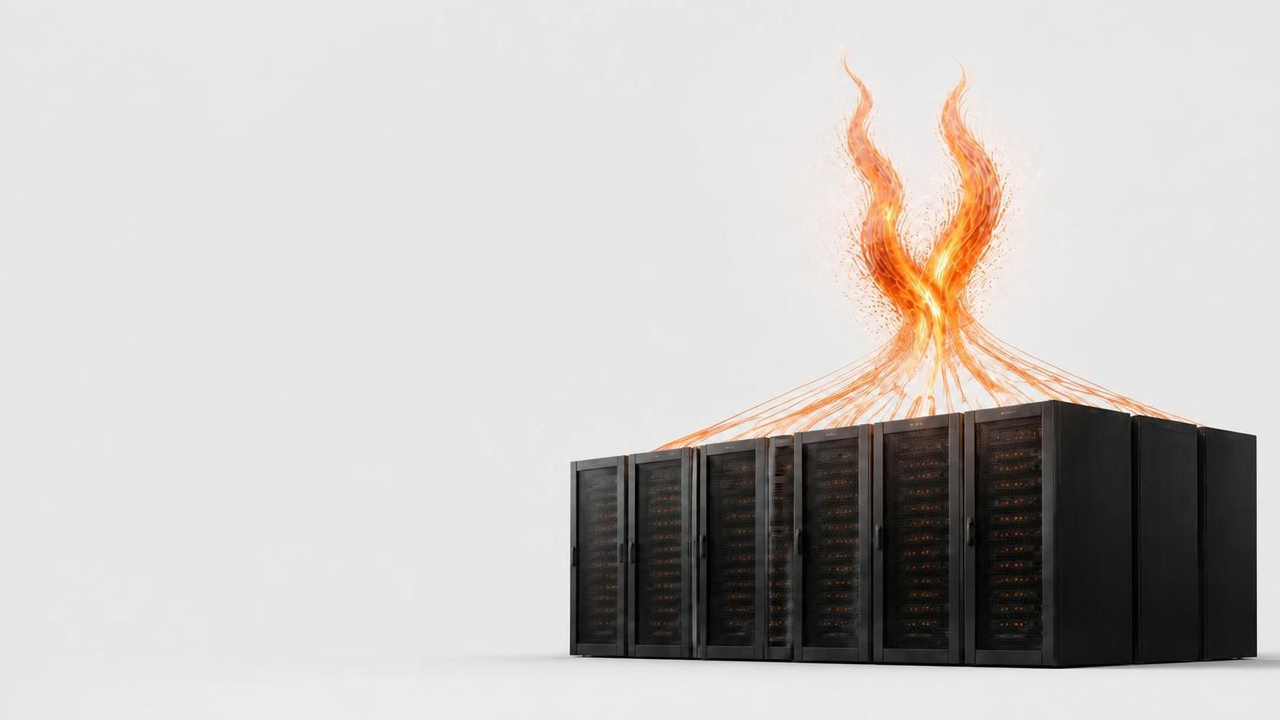
Offshore VPS: SKN contract, racks from Reykjavik to Tokyo. From $3* funded (Scout $5.49 list, $3.00 annual-eff). Crypto-only, no KYC, 40 locations.
Offshore here is a Saint Kitts and Nevis contract billing in crypto, with racks placed across forty cities for law and latency — not one Caribbean PO box. No KYC at any tier.
40 locations · 19 coins · SLA 99.95% · no KYC · public canary
VPS from $3* (fund $50+), storage 1–5 TB NVMe from $24/mo annual-eff, dedicated with IPMI from $30.80/mo. Crypto invoice, no KYC.
Launch nowWhat offshore means here
Two entities, deliberately split. The contract company is WESTFALL AND CO in Saint Kitts and Nevis; the compute itself lives in Reykjavik, Zurich, Amsterdam, Bucharest and thirty-six more cities across four continents — never in the Caribbean. The split is the product: a biller outside your jurisdiction, hardware placed for law and latency, and a crypto invoice that touches neither card network nor bank. The wider field is ranked on best offshore VPS 2026.
What each piece buys, concretely. The contract answers to Nevis corporate law — a creditor or a civil complainant faces a West Indies entity, not a Delaware LLC with a registered agent to serve. The rack answers to the facility's own statute, whichever of the forty flags you picked. The payment answers to no one: an on-chain transfer has no chargeback path, no processor risk desk, and no billing address to subpoena. Three jurisdictions, three different answers — chosen per layer rather than inherited wholesale.
That is the whole idea, stated without incense: offshore is a routing decision across contract, hardware and payment, and each route is printed on this page rather than implied.
The flag map, read as a buyer
| You need | Flags | Why |
|---|---|---|
| Speech-first posture | Iceland (+20%), Switzerland (+35%) | IMMI tradition, no retention mandate / FADP, non-EU process |
| Peering density | Netherlands, Germany, UK | AMS-IX/DE-CIX/LINX metros; lowest EU round-trips |
| Value per euro | Romania, Poland, Bulgaria | EU IP without the premium-metro price |
| US reach | Ashburn, Dallas, New York | East/Central/South routing into US backbones |
| APAC round-trips | Tokyo, Hong Kong, Singapore | JP/HK/SG internet cores |
| Gulf and Africa | Dubai, Johannesburg, Cape Town | regional egress without EU/US hops |
| Quiet premium regimes | Norway (+20%), Luxembourg, Cyprus, Panama (+15%) | scarce capacity or offshore-flavored process, priced openly |
Location premiums as published in the catalog, 2026-09. The other thirty-four flags bill base list.
Six flags carry a premium and say so at checkout; thirty-four bill the same base list as Amsterdam. The premium is a capacity-and-regime price, not a privacy tier — base-list Bucharest answers process exactly as premium Zurich does, just under different law. What changes across the map is which law, which latency and which peering, in that order.
How to choose the flag
Match the flag to the requirement. Speech tradition and geothermal power: Iceland. Non-EU process and FADP: Switzerland. Peering density: Netherlands. LATAM round-trips: Brazil or Mexico. US reach: Ashburn or Dallas. Asia: Hong Kong, Shanghai, Tokyo, Singapore. Gulf: Dubai. Africa: Cape Town and Johannesburg. Thirty-four flags bill the same base list; the six premiums are published at checkout, never discovered there. The coin menu — BTC, USDT, XMR and the rest — is identical everywhere.
A selection heuristic that survives contact with reality: pick the facility whose courts you can reason about, then the one whose latency your users feel, then let price break ties. The reverse order optimizes a monthly figure and inherits a jurisdiction by accident — the most common offshore mistake, and the cheapest to avoid.
Checkout and the ladder
Inbox or token, password, live-rate invoice — no passport, no card. Scout opens at $5.49/mo list ($3.00 annual-eff, $3* funded with a $50+ balance); Sentry (2 vCPU / 4 GB) follows at $7.50; the ladder tops out at Sentinel, 12 vCPU / 32 GB DDR5 / 640 GB NVMe / 10 Gbps, $33.50. Nested virtualization and custom ISOs ship on KVM by default, and provisioning lands about a minute after the payment confirms. Metal on the same account racks 2–4 hours later.
Terms: −10% on the quarter, −20% on the year, applied before the invoice quotes the coin. Metal on the same account racks 2–4 hours later; storage prices by the terabyte from $24/mo annual-eff.
Open the deploy form — the flag picker and the coin picker are on the same short path.
What offshore hosting actually changes
Three things, precisely. Who bills you: a Nevis corporation under Nevis corporate law, which matters in civil disputes and subpoena drafting. What law the rack answers: the facility's own criminal and data statute — Icelandic for Reykjavik, Swiss for Zurich, Dutch for Amsterdam — not the flag on the invoice's letterhead. What the payment reveals: whatever your chosen coin reveals, from a full public ledger (BTC) to a ring signature (XMR).
What it does not change: physics, cross-jurisdiction cooperation treaties, or the terms of service you accepted. Offshore routing adds friction and distance to legal process — it does not add immunity, and the honest section below draws that line with a ruler rather than a shrug.
The honest section: what offshore will not do for you
Not an exemption from law, and any host selling it as one is selling a fantasy with a server attached. The specific limits:
- The facility's local statute governs the rack — full stop. Real process from that jurisdiction works as it would anywhere: an Icelandic order moves an Icelandic box, a Dutch order a Dutch one. Offshore moves the goalposts; it does not remove them.
- Treaties outrank letterheads. MLATs and law-enforcement cooperation cross borders on their own schedule; a Nevis contract adds months to a civil dispute, and paperwork, not a wall, to a criminal one.
- Not a crime product. The AUP bans CSAM, phishing, spam and attacks at every location; abuse handling follows the facility-jurisdiction rule everywhere, and a foreign copyright template gets filed while local criminal process gets answered.
- Not tax or legal advice. Where you are taxable, what you may host, which regulator claims you — those are your jurisdiction's questions, and a VPS flag does not answer them.
- Not invisibility. The box keeps a public IP, the payment keeps its ledger, the domain keeps its registrar. Offshore is one layer of a stack, not the stack.
- Not a migration toggle. Moving a live service between flags is a redeploy plus a DNS flip, not a setting; pick the rack for the workload's lifetime, not for this month's mood.
What the word genuinely buys is jurisdictional distance between you and the biller, plus a map wide enough to place data where its law suits the workload. That is a real product. It is also the whole product — and the jurisdiction hub prints the per-flag detail so the choice stays a decision, never a surprise. Offshore routing is distance engineering; the honest operator budgets for the parts distance cannot buy.
When offshore outgrows a VPS
Whole-core workloads move to dedicated metal from $30.80/mo annual-eff — IPMI, ECC and RAID under the same SKN contract; terabyte-scale archives fit storage plans from $24/mo annual-eff. The flag map, the coin menu and the intake form are identical across all three lines, so “offshore” survives the upgrade from slice to metal without a re-papered account.
At the top of the metal ladder, Citadel (dual EPYC 9474F, 512 GB, 25 Gbps) lists at $298.50 — the same forty flags, the same published premiums, the same crypto invoice. Offshore is not a tier here; it is the geometry of the whole catalog, priced openly at every level — pick the flag by law and latency first, let the SKU class follow the workload.
A Nevis contract, forty flags, one crypto invoice
Six VPS rungs from $3* funded to $33.50 list, metal from $30.80 annual-eff, terabytes from $24 — billed by a Nevis entity, racked under whichever of forty statutes fits the workload, paid in any of nineteen coins. The flag is a choice you make openly at checkout, not a secret you discover at renewal.
Pick a flag and pay the invoice — root follows in about a minute.
Is the VM in Saint Kitts?
No. The contract company is; the RAM, the CPU and the disk sit in one of the forty facility cities, under that facility's local law.
Iceland and Switzerland?
Both are in the picker at their published premium (+20% and +35%) — same image list, same coins, same token-or-inbox signup as every other city.
Do all locations cost the same?
Thirty-four bill identical base list; Iceland, Norway (+20%), Switzerland (+35%) and Luxembourg, Cyprus, Panama (+15%) carry their published premiums. Term discounts apply uniformly across the map.
Is this crime hosting?
No. The AUP applies everywhere: CSAM, phishing, spam and paid attacks are banned, and takedown process runs through the facility's local law — as it should.
When does offshore outgrow a VPS?
Whole-core workloads move to <a href="../dedicated/">dedicated metal from $30.80/mo annual-eff</a>; terabyte-scale archives fit <a href="../storage/">storage plans from $24/mo</a> — both under the same SKN contract.
Does offshore mean no data retention?
It means the facility's statute decides. Iceland legislated no mandatory retention; an EU flag carries GDPR-era rules. The <a href="../jurisdiction/">jurisdiction hub</a> lists the posture per flag.
Primary sources
Ready to launch?
Build the box — VPS, storage or bare metal — create the password, pay the invoice that follows.
Sources: VPSbit — Offshore VPS from $4.80* — 12 Elite Locations