 FYRHost
Anonymous No-KYC Dedicated Servers — Cheapest Crypto-Only Bare Metal with IPMI
Pay with USDT (TRC-20/ERC-20), Monero or Bitcoin. No passport. No KYC. Deploy in 2–4 hours.
Xeon E-2388G → 2× AMD EPYC 9474FECC DDR4/DDR5NVMe RAID 0/1/5/10IPMI on all1–25 Gbps unmetered19 coins + XMR
$30.80/mo annual · $38.50 list · $0 setup · 2–4 h provisioning
Plan ledger
The full 5-SKU ladder. Each row pairs base list with the annual rate; premiums exist only in Iceland and Norway (+20%), Switzerland (+35%), Luxembourg, Cyprus and Panama (+15%) across 40 facilities.
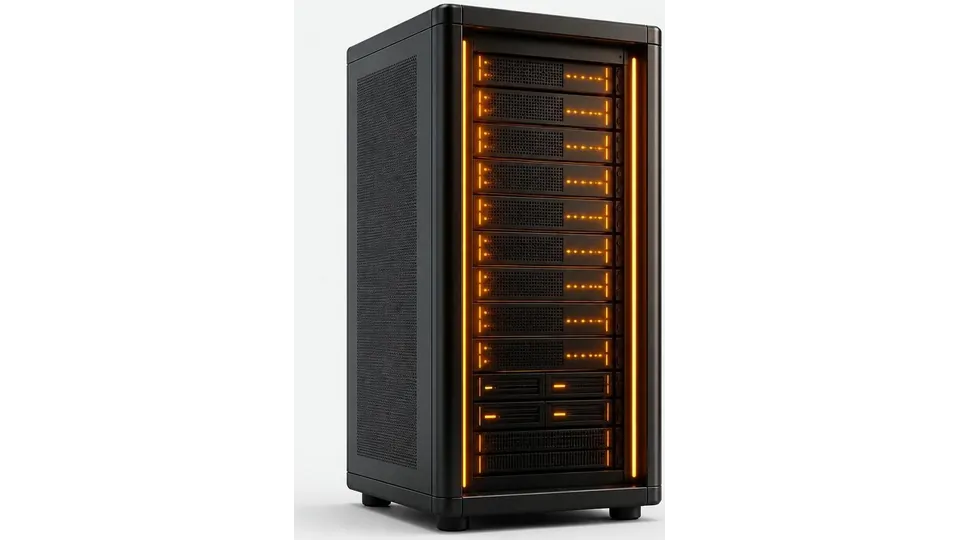
Rack layout
Three boxes lifted straight from the SKU sheet: drive bays, IPMI port, PSU pair, uplink.
$38.50 list · $30.80/mo annual
$108.50 list · $86.80/mo annual
$298.50 list · $238.80/mo annual
Capabilities
- IPMI / KVM-over-IP - Every SKU — console and virtual media when the OS is dead
- PXE + custom ISO - Mount your own image straight from IPMI
- BYOIP + ASN - Fortress and Citadel — LOA + ASN, a few days, not a checkout toggle
- Port 25 + PTR - Open; rDNS editable in the panel after provision
- Remote hands - $24.00/mo — a named technician for reboots, swaps and cabling
- DDoS filtering - Included on every SKU, not an upsell
What fits where
| Workload | Fit | Why |
|---|---|---|
| CI runner fleet | Bastion $108.50 list · $86.80/mo annual | 32c/64t EPYC 7543 with 128 GB ECC-R and 10 Gbps unmetered runs parallel pipelines on your own silicon, not a noisy slice. |
| PostgreSQL primary | Fortress $173.50 list · $138.80/mo annual | 256 GB DDR5 ECC-R and 4 x 2 TB NVMe with RAID 0/1/5/10; IPMI survives a dead OS. |
| Mail server + rDNS | Shield $38.50 list · $30.80/mo annual | Port 25 open, PTR editable after provision, clean IPv4; 8c/16t Xeon E-2388G with 32 GB ECC. |
| Game server | Bastion $108.50 list · $86.80/mo annual | High-clock EPYC, 10 Gbps unmetered UDP and included DDoS filtering; tick rate stays flat at peak. |
| LLM inference | Citadel $298.50 list · $238.80/mo annual | 2 x EPYC 9474F, 512 GB DDR5 ECC-R and a 25 Gbps unmetered port for weight loads and token streams. |
Three hardware families, five SKUs
The ladder is not five variants of one box — it is three silicon families at three price classes, each with a workload it is actually for.
Xeon E-2388G — the single-socket workhorse
Shield is the entry: 8 cores / 16 threads at 3.2–5.1 GHz, 32 GB DDR4 ECC, 2×500 GB NVMe in RAID 0 or 1, a 1 Gbps unmetered port and IPMI behind a VPN — $38.50 list, $30.80/mo annual-eff. High clocks and a modest core count make it the pick for latency-bound single-threaded work: game servers, trading terminals, small databases that want their own disk queues. It is also the cheapest way to learn whether a workload truly needs metal at all.
EPYC 7313 / 7543 — the throughput middle
Vault (16c/32t, 64 GB ECC-R, 2×1 TB NVMe, $68.50 list) and Bastion (32c/64t, 128 GB, 2×2 TB on a 10 Gbps port, $108.50) carry the virtualization and CI fleets: enough cores to slice, enough memory to consolidate, and bandwidth that stops being the bottleneck. Build farms, k8s clusters that want real cores, and transcode pipelines sit here by default.
Xeon Gold 6430 and dual EPYC 9474F — the big iron
Fortress (32c, 256 GB DDR5, 4×2 TB, RAID 0/1/5/10, $173.50) answers dense memory-and-disk workloads; Citadel closes the ladder with two EPYC 9474F sockets — 96 cores / 192 threads, 512 GB DDR5 ECC-R, 4×2 TB Gen4 and a 25 Gbps port behind an L3/L7 scrubber, $298.50 list ($238.80 annual-eff). Whole microservice estates, heavy analytics nodes and archival-grade chain nodes are the honest uses; anything smaller belongs two rungs down.
Metal vs VPS — which to pick
The honest divider is not performance per dollar; it is exclusivity and out-of-band access. Stay on a VPS while the workload fits a slice of a shared host: web apps, tunnels, pruned nodes, CI, game instances — KVM already gives root, nested virt and custom ISOs at every rung. Move to metal when one of four things is true: a whole socket is needed (CPU steal must be zero by contract, not by luck), storage queues are the product (RAID across local NVMe), the kernel gets replaced, or a wedged box must be fixable out-of-band — IPMI reimages a dead machine without a ticket.
The crossover sits at Sentinel: 12 vCPU / 32 GB at $33.50 list ($26.80 annual-eff) against Shield's 8 dedicated cores / 32 GB at $30.80 annual-eff. Between those numbers you are choosing isolation over flexibility, not speed over slowness. The long-form comparison lives at VPS vs dedicated bare metal and the buyer's guide at VPS vs dedicated — when to switch; both lines bill through the same crypto invoice on one account.
What metal does not fix
- Provisioning is hours, not a minute. A VPS images about sixty seconds after credit; a dedicated box racks and hands over IPMI in 2–4 hours — a human bolts it in, and that clock is honest.
- IPMI is yours to harden. Out-of-band access ships behind a VPN by default; exposing it to the internet and forgetting the reset drill are operator errors metal makes possible.
- Disk is finite and physical. Four bays on Fortress and Citadel, two on the rest — capacity planning is a purchase decision, not a slider. Terabyte-scale archives belong on the storage line, where the ladder prices TB, not cores.
- The AUP does not care about the invoice size. CSAM, phishing, spam and paid attacks are banned at $30.80 exactly as at $238.80, and abuse process follows the facility's jurisdiction on every rack.
- Scaling is discrete, not elastic. Metal grows by whole boxes — a resize is a migration with a data sync and a DNS flip, not a slider. Fleets that breathe daily belong on the VPS ladder.
- The floor includes the wait. $30.80 annual-eff buys the whole E-2388G, and the 2–4 hour racking window is part of that price; urgency has a sixty-second VPS path instead.
- Hardware ages in whole machines. A socket bought this year is a five-year decision; plan the refresh as capacity planning, not as a slider.
What metal does fix is equally specific: steal, noisy neighbours, shared disk queues, and the inability to touch a hung kernel. If none of those four has bitten yet, the VPS ladder is cheaper — and it will still be there when one does, on the same account, under the same invoice. The ladder exists to make that move boring when it comes: same checkout, same coins, same policy, bigger invoice.
Entry pricing, checked 2026-09
What no-KYC crypto hosts charge to get into bare metal, verified September 2026. IPMI, ECC memory and scrubbing ship on every FYRHost metal box without a surcharge. Against BitVPS list, Shield undercuts by a dollar (38.50 list / 30.80 annual-eff).
| Provider | Dedicated from | XMR | No-KYC | Watch-out |
|---|---|---|---|---|
| FYRHost | $30.80 | yes, first-class | yes — email only | — |
| ServPrivacy | $66.00 | yes | yes | higher entry; 6 locations vs 21 |
| VSYS Host | $68.00 ($54 yearly) | yes | yes | anti-DDoS is a paid add-on from $100/mo |
| SuperBitHost | €70.00 | yes | yes | footprint claims vary (26 vs 31 countries) |
| Evoluso | €99.00 | not named | yes | Monero never explicitly named |
| Impreza Host | $290.00–$660.00 (Iceland) | yes | yes | 3.6–8× FYRHost entry price |
| BaCloud | €119.00+ | no | unclear | mainstream positioning |
Figures verified 2026-09 on the provider pages named above.
Keep researching
40 Locations Across Four Continents
Europe
Africa & Middle East
How you actually buy it



FAQ
Is this the cheapest no-KYC dedicated?
Shield is $30.80 for a Xeon E-2388G, 32 GB ECC, 2×500 GB NVMe, IPMI and DDoS in 40 locations. That is under ServPrivacy ($66) and VSYS ($68). A lower unnamed sticker still is not this bundle.
Can I pay with USDT?
Yes. USDT rides TRC-20, ERC-20, BEP-20 and SPL, next to Monero and Bitcoin, all on the same invoice as a VPS. No card and no passport.
Do you have dedicated in Singapore, Tokyo and Reykjavik?
Yes. The same five SKUs — Shield through Citadel — deploy in all 40 locations, Singapore and Tokyo included; what changes is the 2–4 h provisioning clock, not the hardware ladder.
How fast is a dedicated server?
2–4 hours after the crypto invoice confirms. IPMI is on the box from handover.
Is there KYC on dedicated?
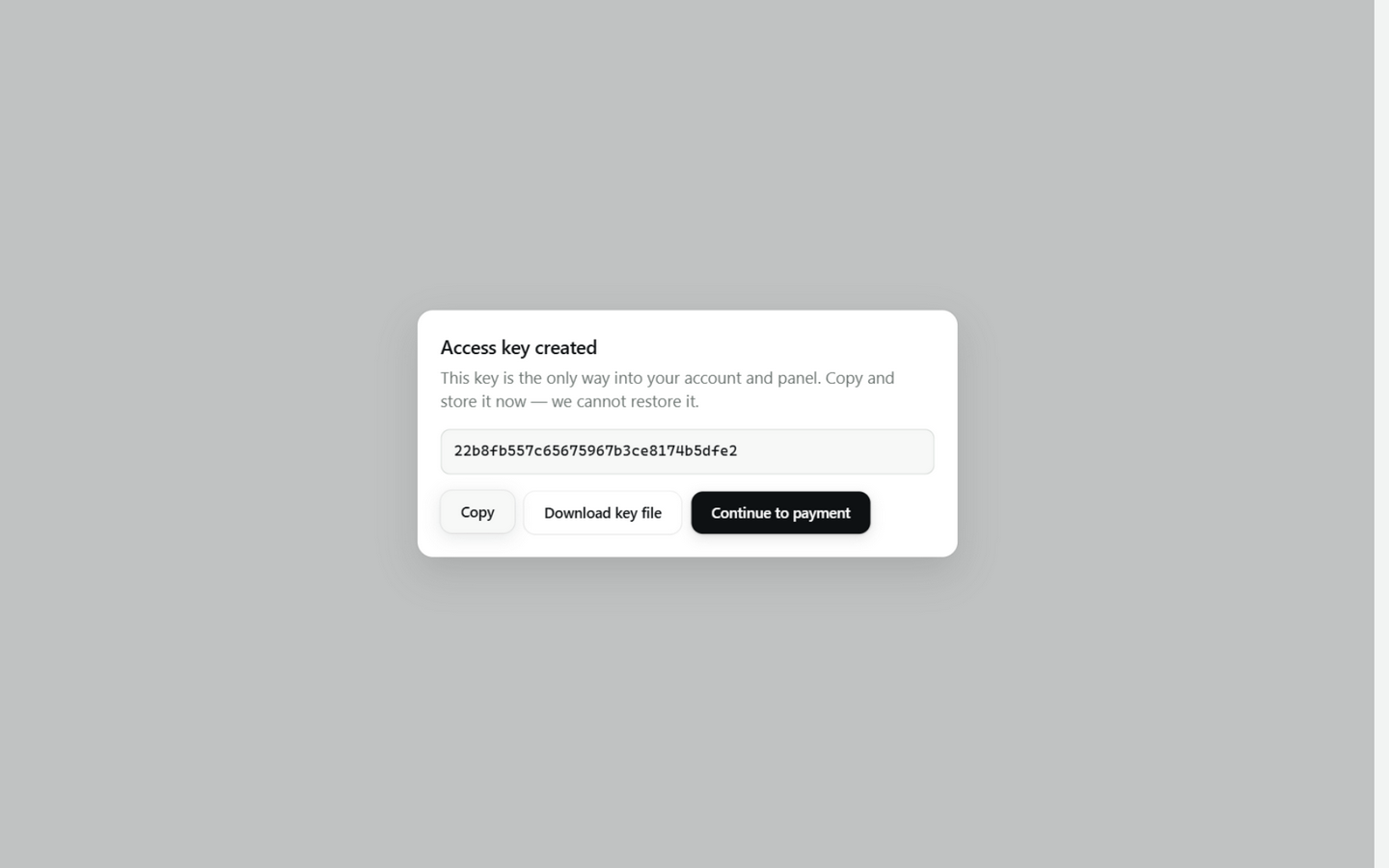
No. Email or token, a password, then the crypto invoice. Same rule at every dedicated tier.
What is on Shield?
8 cores / 16 threads, 32 GB DDR4 ECC, 2×500 GB NVMe RAID 0/1, 1 Gbps unmetered, IPMI and DDoS. $30.80.
Offshore dedicated, or only Europe?
Both. Reykjavik and Zurich remain the speech-first picks; the rest of the map spans the Americas, Asia, Africa and the Middle East at base list — the two northern premiums (IS +20%, CH +35%) are the only markups.
Bitcoin and Monero too?
Yes. Monero, Bitcoin and USDT are first-class on the dedicated invoice.