 FYRHost
Anonymous Storage VPS — Root Access, No KYC, Crypto Only, Unmetered
Cheapest true root NVMe storage with Monero and USDT. Perfect for private backups, archives, media and seedboxes.
Root NVMe 1–5 TB2.5–10 GbpsSnapshots $9.50Borg/Restic/rsync19 coins + XMR
$24.00/mo annual · $30.00 list · 1 TB root NVMe · ~60 s provisioning
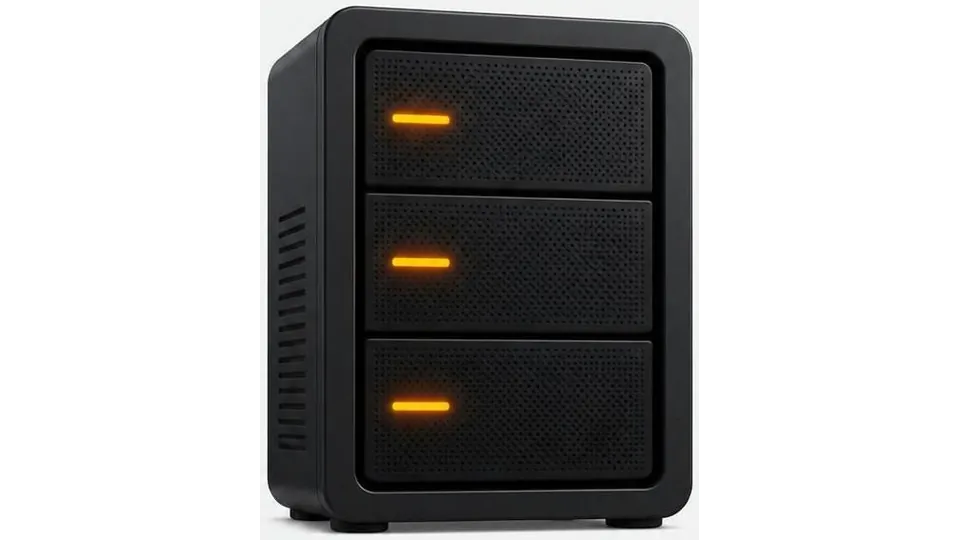
Plan ledger
The full 5-SKU ladder. Each row pairs base list with the annual rate; premiums exist only in Iceland and Norway (+20%), Switzerland (+35%), Luxembourg, Cyprus and Panama (+15%) across 40 facilities.
What fits on 1–5 TB
Terabyte math with the honest usable factor, every price a signed pair.
| Root NVMe holds | Depot 1 800 GB usable | Depot 2 1,600 GB usable | Depot 3 2,400 GB usable | Depot 4 3,200 GB usable | Depot 5 4,000 GB usable |
|---|---|---|---|---|---|
| 4K video, hours (7 GB/h) | 114 | 229 | 343 | 457 | 571 |
| Photos, 12 MP (4 MB each) | 200,000 | 400,000 | 600,000 | 800,000 | 1,000,000 |
| Movies, 1080p (8 GB each) | 100 | 200 | 300 | 400 | 500 |
| WARC pages (1 MB each) | 800,000 | 1,600,000 | 2,400,000 | 3,200,000 | 4,000,000 |
| Camera-months (60 GB/mo, one 1080p stream) | 13 | 27 | 40 | 53 | 67 |
| Price, list · annual | $30.00 list · $24.00/mo annual | $40.00 list · $32.00/mo annual | $50.00 list · $40.00/mo annual | $60.00 list · $48.00/mo annual | $70.00 list · $56.00/mo annual |
×0.8 is the usable figure after RAID and filesystem overhead - the number we quote on purpose. Root NVMe on every Storage SKU, never a protocol box.
 Durability and snapshots
- Root NVMe - Every Storage SKU is a whole KVM machine with a local NVMe disk and your root password on it - not an SMB or NFS appliance.
- RAID - On request: mirror or stripe configured at deploy. The capacity tables apply the 0.8 usable factor throughout.
- Snapshots - $9.50/mo add-on - versioned restore points managed from the panel.
- Offsite - Borg, Restic or rsync to a second city over the same unmetered port you serve from.
Durability arithmetic, honestly: five NVMe drives in RAID 1 or 10 survive simultaneous disk failure, not simultaneous facility loss. A copy that matters exists in at least two facilities — Depot for the working set, a cheap mirror or Borg target elsewhere for the catastrophe copy. Restic and Borg both run happily on any tier; the 2.5–10 Gbps unmetered ports exist precisely because deduplicated backups are a nightly bandwidth workload before they are a capacity one.
Storage, backup or archive — which line is which
Backup means versioned copies pushed on a schedule: Borg, Restic, rsnapshot against Depot's NVMe — the repo lives here, the clients push from wherever. Archive means cold-ish data read rarely: media libraries, datasets, compliance dumps — 3–5 TB tiers price that at $16.67–23.33/TB annual-eff. Working storage — an app's own disk that happens to be huge — is the same box; the difference is only which IOPS profile the workload wants, and local NVMe answers for all three without a protocol gateway in between. Samba, NFS and WebDAV all install on the same root shell; nothing here forces a vendor protocol.
When the requirement outgrows five terabytes, the ladder hands off to dedicated storage servers — same account, same invoice, whole-machine disk.
What a storage VPS does not fix
- Not a managed backup service. The disk is yours; snapshots are a panel add-on, retention is your policy, and nobody here verifies that your Restic job actually ran. Monitoring your own cron is part of the deal.
- Not cold-storage pricing. NVMe per terabyte costs more than glacier-tier object storage — the trade is latency and a root shell, not price. True write-once-never-read archives are cheaper elsewhere, and pretending otherwise would be the first dishonest terabyte on this page.
- Not distributed replication. RAID protects against disk loss; it is not erasure coding across facilities. Geo-redundancy is a second deployment plus your sync tool, not a checkbox.
- Not a five-terabyte ceiling break. Depot tops out at 5 TB by design; beyond it, dedicated storage takes over rather than a surprise oversell.
- Not an AUP exemption. Storage tiers answer the same policy as every other line — CSAM, phishing payload staging and attack infrastructure are banned at $30 exactly as at $3, and takedown process follows the facility's jurisdiction.
What it does fix is the failure mode of cheap VPS disks everywhere: a 40 GB slice that fills, thrashes and takes the workload down with it. Capacity priced as capacity — $24/mo annual-eff per terabyte, unmetered port included — is the whole product. The corollary is printed just as plainly: what the terabytes do not include is anyone babysitting them. The box shows up full of nothing and stays whatever you make of it — a backup target that actually gets tested, an archive that actually gets indexed, or a mount nobody remembers to fill. The anonymous storage VPS page covers the privacy angle of the same line, and best storage VPS 2026 puts it in the field.
Entry pricing, checked 2026-09
Big-disk alternatives side by side, verified September 2026. The boxes quoting less per TB are HDD or archive services without root, settled by card or gated behind an ID upload; for a crypto-only, ID-free root NVMe server, FYRHost is the floor.
| Provider | Storage from | $/TB | Crypto | Watch-out |
|---|---|---|---|---|
| FYRHost Storage | $24.00 / 1 TB NVMe | $24.00 | 19 coins incl. XMR | — |
| Hetzner Storage Box | €3.20 / 1 TB | ~$3.50 | no — cards/bank only | can demand gov ID; not a root VPS (SMB/rsync only) |
| BuyVM Slabs | $5.00 / TB (attach-only) | $5.00 | via CoinPayments | a compute slice is required; legal name and address in the ToS; Cloudzy subsidiary |
| Contabo Storage VPS | €14.00 / 1 TB | ~$15.00 | no — explicit | no crypto; ~4× per-TB price |
| ultra.cc | €6.50 / 2 TB HDD | ~$3.25 (HDD) | generic crypto | HDD class, managed seedbox |
| RapidSeedbox | €8.00 / 1 TB managed | ~$7.70 | BTC | managed seedbox, not a root VPS |
Figures verified 2026-09 on the provider pages named above.
Keep researching
40 Locations Across Four Continents
Europe
Africa & Middle East
Built for private storage workloads
Storage without a name attached: signup takes no ID, the invoice runs Monero or Bitcoin, and the root password on the NVMe is yours.
Private backups
Borg, Restic and rsync land here with snapshot history on tap. The invoice is an XMR one and the account carries no name.
Nextcloud / file cloud
A Dropbox you actually own: 1-5 TB NVMe, the users and share links under your hand.
Media library
Jellyfin or Plex streaming over an unmetered 2.5-10 Gbps port to every screen in the house.
Cold archives & datasets
Crawl corpora, WARC sets, model weights - bulk NVMe that stays reachable instead of thawing on request.
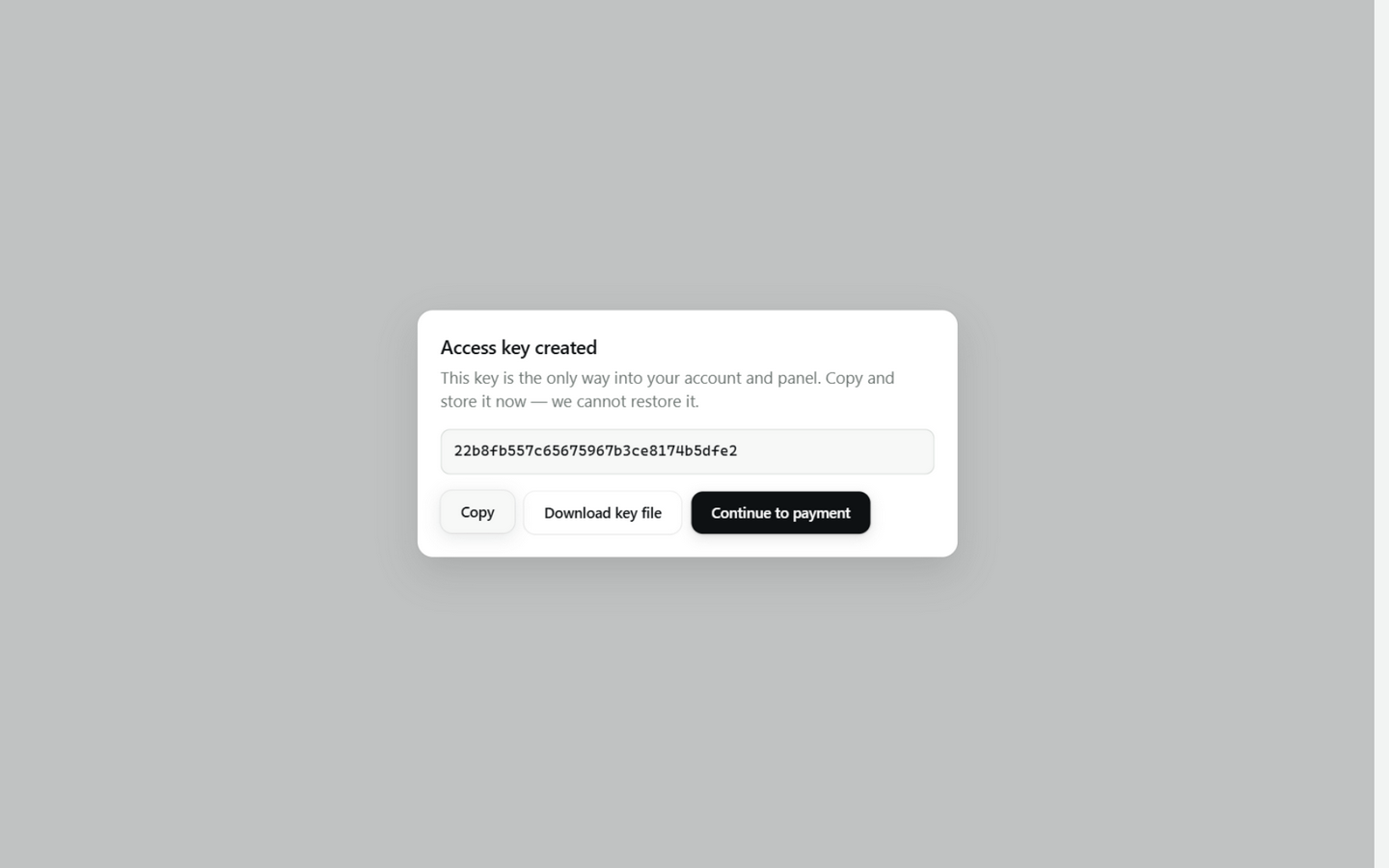
How you actually buy it



FAQ
Is this the cheapest storage VPS with crypto?
At Depot 1 you pay $30 list or $24/mo billed annually for 1 TB of root NVMe with 8 GB ECC behind an unmetered port. Boxes undercutting that per terabyte usually trade down to HDD, gate the disk behind SMB, or want a card with a name on it. This line stays root-NVMe and no-KYC.
Can I pay a storage VPS with USDT?
Yes. USDT rides TRC-20, ERC-20, BEP-20 and SPL, next to Monero and Bitcoin. No KYC step anywhere on the storage line.
Do I get root?
Yes. It is the same KVM root a compute VPS gives you — your kernel, your SSH keys — with 1 to 5 TB of local NVMe behind it.
What is it for?
Private backups, archives, media libraries and seedboxes. Unmetered port, no passport.
Is there KYC on storage?
No. Same checkout as VPS and dedicated.
Storage in Singapore, Tokyo or Reykjavik?
Yes. All 40 locations, same $24–$56 ladder.
How big is the largest disk?
Depot 5 tops the line: 5 TB NVMe, 8 vCPU, 32 GB DDR5 ECC, a 10 Gbps unmetered port — $70 list, $56/mo on the annual term.
Snapshots?
Optional add-on at checkout. The disk itself is local NVMe, not a network archive.